You buy a new pan, and for a few weeks it’s perfect: eggs slide right out and cleanup takes seconds. Then the coating starts to scratch, the base warps, and food begins to stick again. Sound familiar? Many home cooks end up replacing their cookware every year or two, often because they chose by price or looks rather than by what’s actually inside the pan.
In this guide, we’ll walk you through what really matters when choosing a nonstick cookware set: coating types, base construction, stove compatibility, the pieces worth having, and how to care for them so they last. We’ll also share how Carote approaches everyday nonstick cookware, so you can pick a set that fits the way you cook.
Why Nonstick Cookware Is Still a Kitchen Essential
With so many cooking trends coming and going, it’s fair to ask whether nonstick cookware still deserves a place in your kitchen. For most home cooks, the answer is yes. A good nonstick pan solves everyday problems that other materials simply can’t match as easily.
Less Oil, Easier Cooking, Faster Cleanup
The biggest advantage is simple: food releases from the surface without a fight. You can cook eggs, pancakes, fish fillets, and sautéed vegetables with little or no added oil, which makes it easier to prepare lighter meals. Delicate foods stay intact instead of tearing apart when you flip them.
Cleanup is just as easy. In most cases, a soft sponge and warm soapy water are enough to remove residue, so you spend less time scrubbing and more time enjoying your meal.
Who Benefits Most
Nonstick cookware is a smart choice for:
- Busy families, who need quick weeknight meals and minimal cleanup
- Beginners, who are still learning heat control and timing, since food is less likely to stick or burn
- Health-conscious cooks, who want to reduce the amount of oil and butter they use
- Small-space and everyday cooks, who rely on one or two pans for most of their meals
Common Complaints (and How to Avoid Them)
Nonstick pans have a reputation for wearing out quickly, but the problem usually comes down to a few preventable issues:
- Peeling or scratching: Often caused by a thin coating, metal utensils, or overheating. A quality multi-layer coating and the right tools make a big difference.
- Warping: Thin pan bodies bend under high heat. A thick, flat base helps the pan stay stable and heat evenly.
- Short lifespan: Usually the result of choosing by price alone and skipping basic care. We’ll cover both in the sections below.
The good news is that these problems are easy to avoid once you know what to look for. Next, let’s look at the coating itself, since it’s the single most important part of any nonstick pan.
Understanding Nonstick Coatings
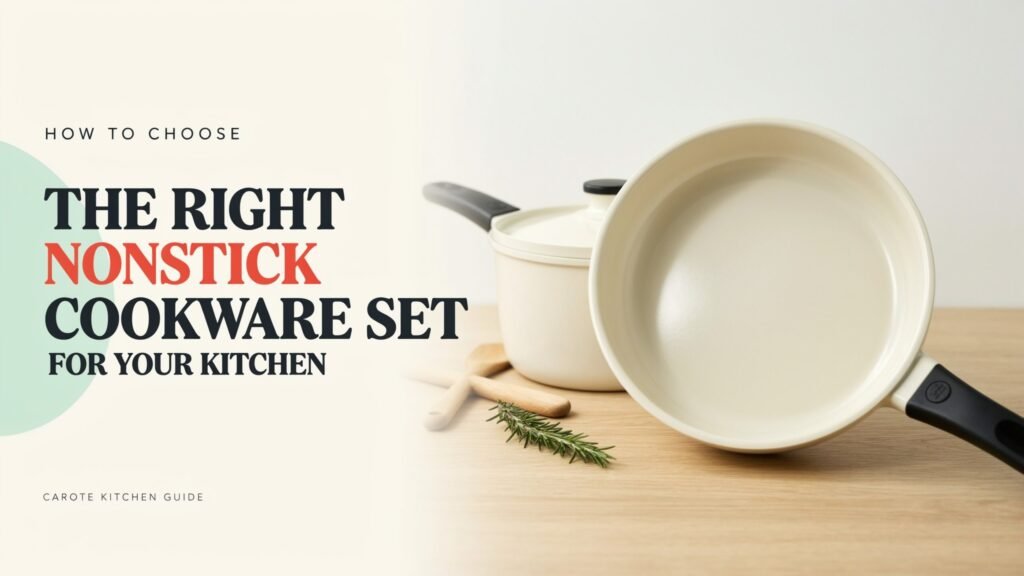
The coating is what makes a nonstick pan nonstick, and it’s the part that decides how long the pan will perform. Most coatings fall into three groups, each with its own strengths.
Traditional PTFE Coatings
PTFE is the classic nonstick material and is still the most widely used. It offers excellent food release and is very easy to clean.
- Pros: Slick surface, works with very little oil, and is usually affordable.
- Cons: A basic single-layer coating can scratch easily, and PTFE should not be overheated. As a general rule, keep cooking temperatures low to medium and don’t preheat an empty pan on high.
Granite and Stone-Effect Coatings
Granite cookware has become one of the most popular choices in recent years. These pans usually combine a nonstick base with a speckled, stone-like finish, often built from several layers. The result is a surface that looks distinctive and tends to feel more durable than a basic single-layer coating.
- Why people like it: The multi-layer structure resists everyday wear better, the speckled look hides small marks, and the pans still release food easily.
- Good to know: “Granite” describes the look and layered construction, not a solid stone pan. As with any nonstick, silicone or wooden utensils will help it last.
Ceramic Coatings
Ceramic coatings are mineral-based and are often marketed as a more natural alternative.
- Pros: Smooth surface, free of PTFE, and typically good at moderate heat.
- Cons: Many ceramic coatings lose their nonstick performance faster than other types, especially when used on high heat or washed harshly. They may need more careful handling to last.
What “PFOA-Free” Really Means
PFOA is a chemical that was once used in manufacturing some nonstick coatings. It has been phased out by responsible manufacturers, and today “PFOA-free” is the standard to look for. In plain terms: if a set doesn’t clearly state that it is PFOA-free, think twice before buying it. Keep in mind that this label tells you about one substance, not the overall quality of the pan, so it’s still worth checking coating layers, base thickness, and warranty.
Our Pick: Carote’s Granite-Coated Range
If you want the easy cleanup of nonstick with a tougher, better-looking surface, granite-coated cookware is a great place to start. Carote’s granite nonstick collection is designed for everyday cooking, from breakfast eggs to weeknight dinners.
Of course, the coating is only half the story. What sits beneath it matters just as much, which is what we’ll look at next.
Cookware Materials and Construction: What’s Under the Coating
Two pans with the same coating can perform very differently. The difference is usually the body of the pan, meaning the metal it’s made from, how thick the base is, and how well the handle is built. These details decide how evenly your food cooks and how long the pan keeps its shape.
Die-Cast Aluminum vs. Forged Aluminum vs. Stainless Steel
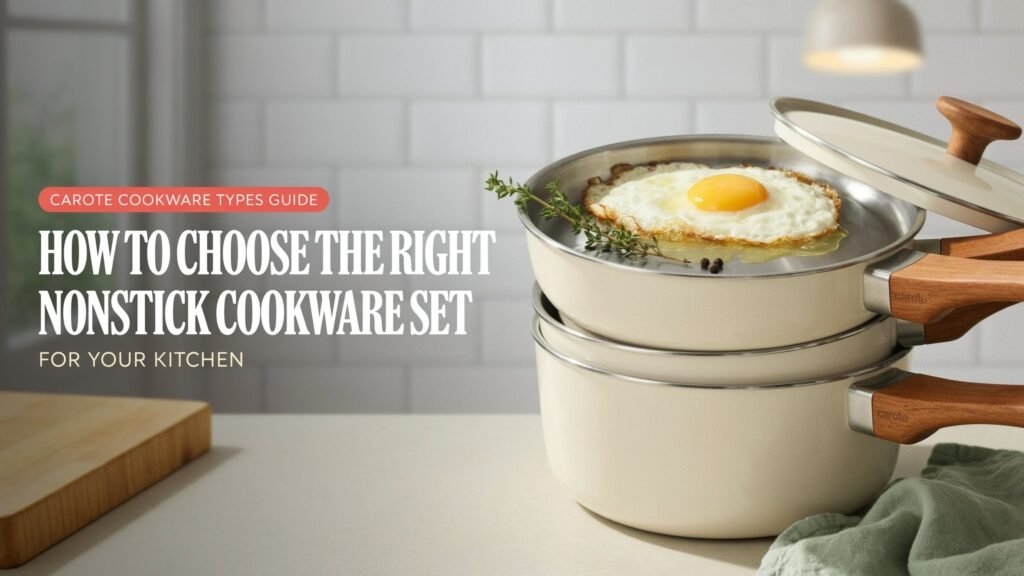
- Die-cast aluminum: Molten aluminum is poured into a mold, which allows a thick, solid body. It heats evenly, holds its shape well, and is a popular choice for nonstick pans.
- Forged (pressed) aluminum: Made by pressing a sheet of aluminum into shape. It is lighter and often more affordable, but thinner versions can warp more easily under high heat.
- Stainless steel: Very durable and great for searing, but it doesn’t offer nonstick performance on its own. It is usually used as a base layer or in tri-ply cookware, and it is heavier than aluminum.
For everyday nonstick cooking, a thick aluminum body is usually the best balance of weight, heat distribution, and price.
Why a Thick, Flat Base Matters
The base is where the heat meets the pan, so it has a big influence on results:
- Even heating: A thicker base spreads heat across the whole surface, which helps you avoid hot spots and burnt patches.
- No warping: A sturdy base stays flat on the burner, even after repeated heating and cooling.
- Better contact: A flat bottom sits properly on the stove, which improves efficiency, especially on glass-ceramic and induction cooktops.
A quick test in the store or at home: place the pan on a flat surface and check that it doesn’t rock. Lift it, too. A pan that feels reasonably solid in your hand is often a sign of a better base.
Handles: Comfort and Safety
Handles are easy to overlook, but you’ll hold them every time you cook. Look for:
- Bakelite or heat-resistant materials: These stay cooler on the stove and are comfortable to grip.
- Secure attachment: Riveted or well-fastened handles should feel firm, with no wobble.
- Oven limits: If you plan to use the pan in the oven, check the maximum temperature for both the handle and the lid.
- Detachable handles: These make it easy to stack pans, save cabinet space, and move cookware from stove to table or fridge.
Our Pick: Carote Sets with Detachable Handles
If your kitchen is short on storage, a set with detachable handles is a practical solution. The pans nest neatly together, so a full set takes up far less room than traditional cookware.
Once you’ve chosen the right construction, there’s one more thing to confirm before you buy: whether the cookware will work on your stove. That’s what we’ll cover next.
Will It Work on Your Stove? Induction and Heat Compatibility
Even the best pan is useless if it doesn’t work with your cooktop. Before you buy, it’s worth spending a minute checking compatibility, especially if you’ve recently switched to induction or plan to.
Gas, Electric, Ceramic, and Induction: What Changes
- Gas: Works with almost any cookware. Just make sure the flame doesn’t extend up the sides of the pan, since that can damage the coating and handle.
- Electric coil and glass-ceramic: Need a flat base for good contact. A warped or uneven bottom heats poorly and can scratch glass surfaces.
- Induction: Heats the pan through magnetism, so the cookware must have a magnetic base. Pans without one simply won’t heat up.
If you cook on more than one type of stove, or think you might upgrade in the future, an induction-compatible set is the safest choice because it works on every cooktop.
How to Check for Induction Compatibility
There are two easy ways to find out:
- Look for the induction symbol (a coil-shaped icon) on the bottom of the pan or on the packaging.
- Try the magnet test: If a fridge magnet sticks firmly to the base, the pan should work on induction.
Aluminum on its own is not magnetic, so induction-ready aluminum pans include a bonded magnetic layer or plate in the base. A good induction base should also be flat and thick enough to heat evenly without warping.
Oven-Safe Temperature Limits and Lids
Many people assume a pan that can go on the stove can also go in the oven, but that isn’t always true. Check these three things:
- Pan body and coating: Look for the manufacturer’s maximum oven temperature.
- Handle: Bakelite and plastic handles often have a lower heat limit than the pan itself, and detachable handles are usually not meant for the oven.
- Lid: Glass lids and their knobs may have their own, lower temperature limit.
When in doubt, follow the temperature rating in the product manual rather than guessing. Staying within the limit protects both the coating and the handle.
Our Pick: Induction-Compatible Carote Pans
If you want one set that works on any stove, look for Carote cookware with an induction-ready base. It’s a flexible choice for renters, for anyone planning a kitchen upgrade, and for households with more than one cooktop.
What to Look for in a Cookware Set (Buying Checklist)
A good cookware set should match the way you actually cook. Before you add anything to your cart, it helps to know which pieces earn their place in the kitchen and which ones end up at the back of the cupboard.
The Pieces You’ll Actually Use
- Frying pan (10 to 12 inches): The workhorse of most kitchens, used for eggs, pancakes, fish, and sautéed vegetables.
- Saucepan with lid: Ideal for sauces, grains, soups, and reheating.
- Stockpot or casserole: Needed for pasta, stews, and batch cooking.
- Sauté pan: Deeper sides make it great for braising and one-pan dinners.
- Wok: Worth having if you cook stir-fries often, thanks to the high sides and wide cooking surface.
Set vs. Individual Pans
A set makes sense when:
- You’re furnishing a first kitchen or replacing old cookware all at once
- You want a matching look and stackable storage
- You cook a variety of meals and will use most of the pieces
Individual pans make sense when:
- You only need to replace one worn-out pan
- You already have a few pieces you like
- You cook the same dishes most days and need just one or two specialist items
Size Guide by Household
| Household | Suggested pieces |
|---|---|
| Single | 1 frying pan, 1 small saucepan |
| Couple | 2 frying pans (different sizes), 1 saucepan, 1 casserole |
| Family of 3 to 5 | Frying pans, 2 saucepans, 1 large casserole or stockpot, 1 sauté pan |
Quick Buying Checklist
Before you buy, run through these five points:
- Coating quality: Multi-layer, clearly labeled PFOA-free
- Base thickness: Thick and flat, with no rocking on the stove
- Handle comfort: Firm, heat-resistant, and comfortable to hold
- Weight: Solid enough to feel stable, but light enough to lift easily when full
- Warranty and support: Clear terms and a brand that stands behind the product
Carote Picks by Cooking Style
Every kitchen is different, and so is every cook. Instead of choosing by product name, start with what you cook most often. The table below matches common cooking styles with the type of Carote cookware that suits them best.
| Cooking style | Recommended Carote product | Best for | Key feature | Link |
|---|---|---|---|---|
| Everyday breakfasts | Nonstick frying pan (8 to 10 inch) | Eggs, pancakes, omelets | Easy food release with little oil | [Shop frying pans →] |
| Weeknight family dinners | Large cookware set | Cooking several dishes at once | Pans and pots for every step of a meal | [Explore sets →] |
| One-pot meals and stews | Nonstick casserole or stockpot with lid | Soups, stews, pasta, batch cooking | Deep body and even heating | [Shop casseroles →] |
| Stir-fries and quick sautés | Nonstick wok or deep sauté pan | Vegetables, noodles, fried rice | High sides and wide cooking surface | [Shop woks →] |
Everyday Breakfasts: Eggs, Pancakes, and Omelets
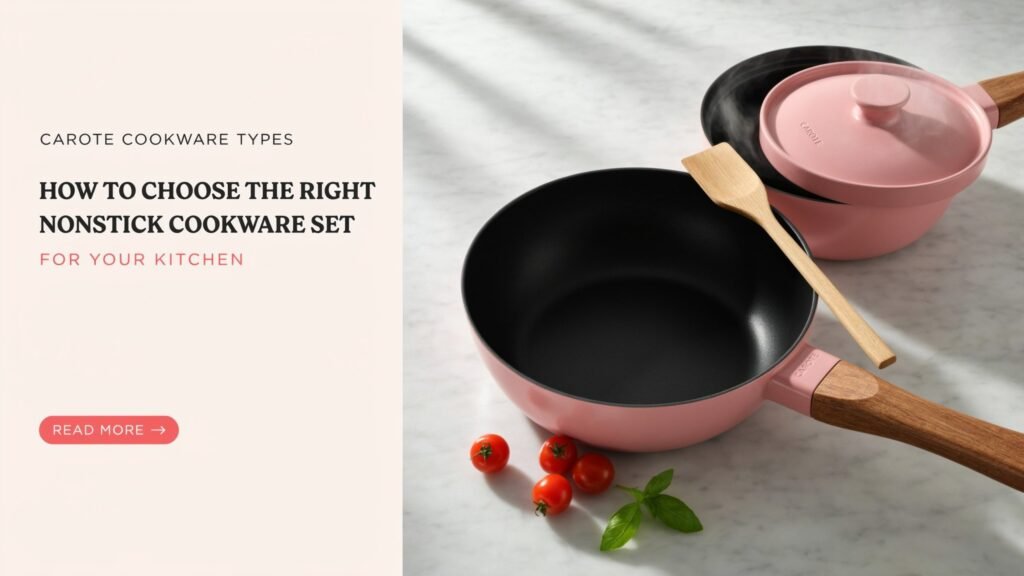
Morning cooking needs a pan that heats quickly and releases food cleanly. A smaller nonstick frying pan is ideal here: it’s light, easy to flip with one hand, and quick to wash before you head out the door. Use low to medium heat and a silicone spatula for the best results.
Weeknight Family Dinners
When you’re cooking for several people, you often need a frying pan, a saucepan, and a pot working at the same time. A full set saves you from buying pieces one by one, and matching pans stack neatly in the cabinet. If storage is tight, look for a set with detachable handles.
One-Pot Meals and Stews
For soups, braises, and pasta, you need depth and a snug-fitting lid. A nonstick casserole or stockpot keeps ingredients from sticking to the bottom, which makes long simmering dishes easier to manage and much easier to clean afterward.
Stir-Fries and Quick Sautés
Stir-frying is all about space and speed. A wok or deep sauté pan gives you room to toss ingredients without spilling them. Heat the pan briefly, add your oil, and keep the food moving. Remember that nonstick coatings work best at medium to medium-high heat, not at the extreme temperatures used in traditional wok cooking.
Once you’ve picked your pieces, the next step is making them last, which is what we’ll cover next.
How to Make Your Nonstick Cookware Last Longer
Even the best nonstick pan needs a little care. The good news is that the habits that protect your cookware are simple, and once they become routine, they can add months or even years to its life.
Use Low to Medium Heat
High heat is the number one enemy of nonstick coatings. Overheating can break down the surface and cause food to start sticking. Most everyday cooking, from eggs to chicken breasts, works perfectly well on low to medium heat. Let the pan warm up gradually, and never leave an empty pan heating on a high burner.
Choose Silicone or Wooden Utensils
Metal spatulas, forks, and whisks can scratch the surface, even on tougher granite coatings. Silicone, wood, and nylon tools are gentle on the pan and just as effective. Skip cutting food directly in the pan, too.
Hand Wash vs. Dishwasher
Even if a pan is labeled dishwasher-safe, hand washing is the gentler option. Harsh detergents and high-temperature cycles can wear down the coating over time.
- Let the pan cool first: Avoid washing a hot pan right away.
- Use a soft sponge: Skip steel wool and abrasive scrubbers.
- Dry before storing: This protects the pan and prevents water marks.
Avoid Cooking Sprays and Thermal Shock
- Cooking sprays: Many contain additives that build up as a sticky film on the surface and are hard to remove. A small amount of oil or butter is a better choice.
- Thermal shock: Running cold water over a hot pan can cause warping and stress the coating. Always let it cool down naturally for a few minutes first.
Smart Storage
How you store your pans matters as much as how you cook with them. Stacking pans directly on top of each other can scratch the coating.
- Use pan protectors: Felt or soft cloth liners placed between pans prevent scratches.
- Hang them up: If you have the space, hanging pans keeps surfaces from touching.
- Detachable handles: Pans with removable handles nest neatly, which reduces contact and saves space.
Common Mistakes When Buying Nonstick Cookware
Even careful shoppers can end up with cookware that disappoints. Here are the four most common mistakes, and how to avoid them.
Choosing by Price Alone
A very low price often means a thin body, a single-layer coating, and a shorter lifespan. The cheapest set can end up costing more if you have to replace it every year. Compare the construction and warranty, not just the price tag.
Ignoring Base Thickness and Weight
A pan that feels flimsy in your hand will likely warp and heat unevenly. Check that the base is thick and flat, and that the pan feels solid without being too heavy to handle comfortably.
Buying a Set with Pieces You’ll Never Use
A 15-piece set sounds like a bargain, but many of those pieces may be lids, utensils, or sizes you don’t need. Count the actual pans and pots, and choose the set that covers the way you cook.
Not Checking Stove Compatibility
This one is easy to avoid and frustrating to discover too late. If you have an induction cooktop, or might get one in the future, confirm that the base is magnetic before you buy. Also check the oven-safe limits if you plan to use the pan in the oven.
Frequently Asked Questions
1. Is granite-coated cookware safe?
Granite-coated cookware is generally safe when it is made by a reputable manufacturer, clearly labeled PFOA-free, and used as directed. Avoid overheating the pan, and stop using it if the coating is badly scratched or peeling. Always check the manufacturer’s safety information for the specific product.
2. How long does nonstick cookware last?
It depends on the quality of the coating and how you care for it. With good construction, low to medium heat, gentle utensils, and hand washing, a nonstick pan can last several years. Heavy daily use and high heat will shorten that.
3. Can I use metal utensils on granite nonstick pans?
It’s best not to. Even though granite coatings are tougher than basic ones, metal tools can still scratch the surface over time. Silicone, wood, or nylon utensils are the safer choice.
4. Is Carote cookware suitable for induction cooktops?
Many Carote products are designed to work with induction, but not every model necessarily is. Look for the induction symbol on the product page or packaging, or do the magnet test on the base.
5. Can I put nonstick pans in the dishwasher?
Some are labeled dishwasher-safe, but hand washing is gentler and helps the coating last longer. Check the care instructions for your specific pan.
6. When should I replace my nonstick pan?
Replace it when the coating is deeply scratched or flaking, food sticks even with oil, or the base is warped and no longer sits flat on the stove.
Conclusion
Choosing the right nonstick cookware set comes down to four things: a quality multi-layer coating that is clearly PFOA-free, a thick and flat base, compatibility with your stove, and a set that matches the way you actually cook. Add a little everyday care, with gentle heat, soft utensils, and hand washing, and your pans can stay in great shape for years.